About me
I have always been a writer.
When I was six, maybe seven, I wrote my first piece of speculative fiction. The heroes? A Stormtrooper and a Cylon Centurian. It also included my first (and last!) attempt at illustrating my own stories. Turns out, neither Stormtroopers nor Cylons render well in Crayola.
But I was already a writer.
In high school, I wrote a fantasy novel a few pages at a time for a dear friend who would call me and, before she even said “Hello,” would say, “Read me!”
Here I was, a writer, reading for my audience of one.
In college, sitting on the floor in a bookstore, I happened across a book about writing that said to be a writer, you should write a thousand words a day. I was probably 19. For the last three years of college, I wrote at least a thousand words of fiction every day. I even wrote a science fiction novel for my senior honors thesis. That novel landed me a literary agent not long before I started a doctoral program in industrial-organizational psychology. Nine months later, I realized I couldn’t do grad school full-time and be a full-time writer, so my agent and I mutually agreed to part ways.
Still… a writer. And because you can’t keep a writer down, I ended up doing freelance writing for Wizards of the Coast’s Organized Play division, writing web content and adventure scenarios for their Star Wars: Living Force RPGA campaign and serving as its plot director for the first two years of the campaign’s existence. Among other things, I authored “Coruscani Dawn,” an adventure that debuted at the “Star Wars Celebration II” convention in Indianapolis, Indiana.
I kept writing my thousand words every day until I was around 45. This led to 30 or so book-length first drafts, and a few that I revised fairly extensively, but also non-fiction and academic writing for work. Fiction writing faded out when work started taking up a lot more brain space; I hit that weird place in a career when people think that it’s time for you to lead. So, I did.
Some things, you stop doing them and you stop being them. Turns out, that’s not how it works for me and writing.
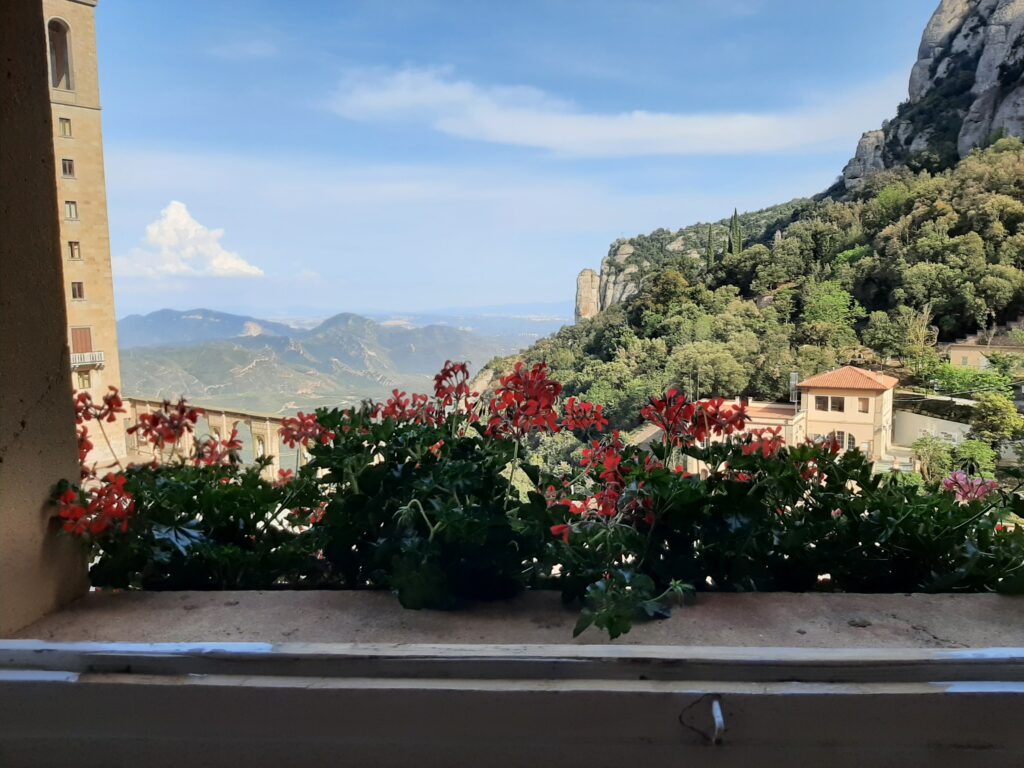
At 51, I rolled over and scribbled down a fragment of an idea I had while falling asleep. A few months later, sitting in a rented room in Montserrat, I started writing that story, the first fiction I’d written in way too long. I kept writing, finding joy in the act of creation; that joy led me to several projects, but the one closest to my heart is Through the Thinning.
It’s no surprise that I couldn’t stay away.
I’m a writer, after all.

Morrie Mullins
Writer

Jessie Mullins
Brainstorming partner
Since I started writing again, themes of identity continually surface in my stories. Like many people, I wear a lot of “masks;” I mastered being a social chameleon when I was 12 or 13, and it’s part of why I love writing. It’s a way to pretend I’m someone that I’m not.
Where did my identity come from? Well, my love of writing, and of story, comes from my father. I have vivid memories, from when I was about 5, of him sitting by my bed and reading me Lewis’s “Chronicles of Narnia,” The Hobbit, and more. He would set up a tape recorder by the head of my bed and record himself reading to me on 1977-vintage magnetic tapes.
We found a couple of those, tucked in a desk drawer in his home office, after he passed.
I also remember Dad coming home from work and going into his home office. The sound of his typewriter as he banged out stories I wouldn’t read for almost a half-century. Dad was a writer, the kind who wrote when he could because he had a family, and taking care of his family always came first.
It’s no wonder I came to love words, and stories. To love writing.
I suppose it’s also no wonder that it’s taken me quite so long to embrace it as my core identity. I’ve been following in Dad’s path by not putting my writing first for a long time, but there’s this thing with paths: you get to choose whether to keep walking that path, or stomp through the brush and make your own.
This is me, then. Stomping. I kept it gentle, at first. Dad finished his career as a constitutional law professor. I’ve made my career as a professor of organizational psychology. Even when I’ve not been writing fiction I’ve been writing, and I’ve been mentoring writing. In fact, I independently-published a book in 2025 that includes all the advice I wish I’d gotten about writing my thesis and dissertation, and just generally about surviving grad school.
As rewarding as my career has been, though, and as much as I love teaching, the embossed message on the vegan-leather desk mat at my writing desk really says it all:
“Write. It’s why you’re here.”
Themes of identity are personal for me, and not just because I’m re-defining myself from “Someone who writes when he has time” to “A writer ready to share his stories.” How we understand ourselves is an idea I’m not sure I could get tired of exploring. In fact, the first thing I wrote when I re-immersed myself in fiction was a trilogy exploring identity on multiple levels. You can read about that, and other work I have in process, over here.
One of the ways we understand ourselves is through who, and what, we love. As such, I’m kind of a sucker for unconventional or unexpected love stories.
A lot of the themes that matter to me, including identity, are central to my novel Through the Thinning. The short form:
In a world of fading magic, a scholar seeking magical portals finds their quest for the truth running them afoul of warlords, bandits, and politicians. When arcane theory leads to disturbing reality, our scholar must decide what they are willing to do for knowledge—and, ultimately, for love.
You can read more about Through the Thinning here.
